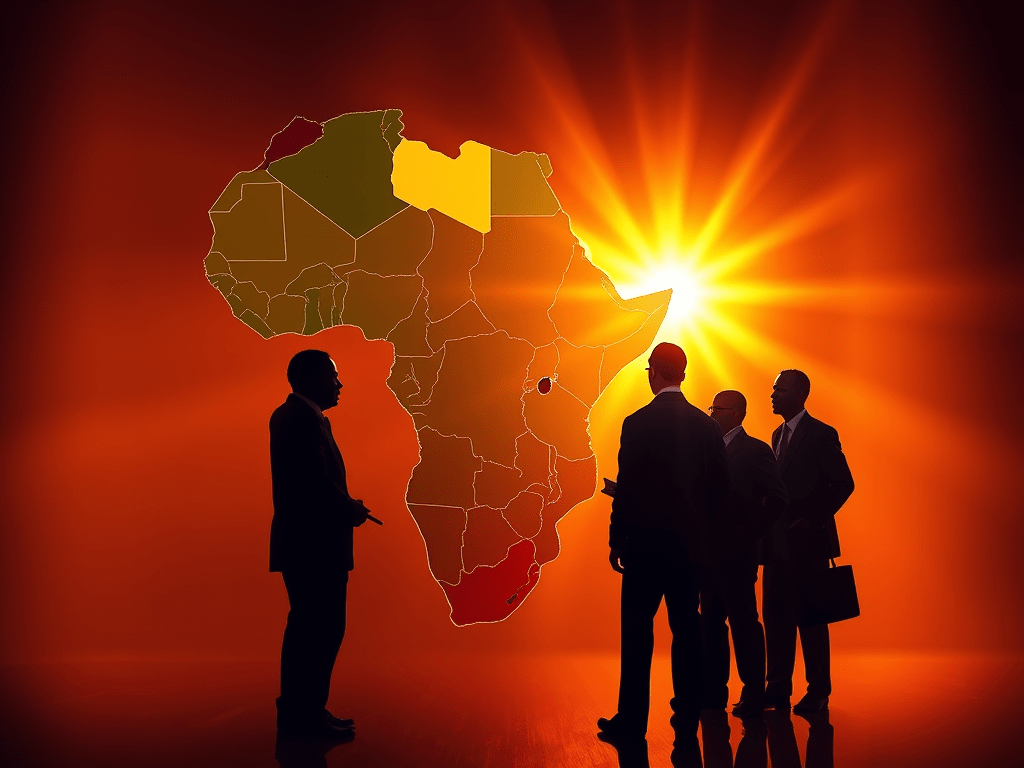
Africa, the cradle of civilization with a population of 1.5 billion people (most of whom are under the age of 25) has had a long, cherished, and checkered history. From time immemorial, the continent has experienced many exploitative ventures by both external and internal forces. It has gone through the dark ages of slavery and colonization. Its bonanza of resources have served as grounds for turf battles and expansionist aggression. Yet, despite all of that, its plethora of resources remains largely untapped and under utilized.
By the year 2030, more than 20% of the world’s population will live on the African continent. Its arable land can feed the world. More importantly, Africa is largely at peace, although that peace is fragile.
To claim that the future is Africa is not by any means ostentatious or showy. It is a reality substantiated by tangible socioeconomic indicators. Investment in Africa is at an all time high. This is mainly driven by the insatiable need for precious minerals, like rare earth elements or metals. Other important minerals, like gold, bauxite, and copper are also in demand. Rare earth elements (REEs) are crucial or pivotal for modern technology and various high-tech applications due to their unique components.
The continent’s GDP was approximately $2.6 trillion in 2020, the number is expected to balloon to about $29 trillion in the year 2050. It also lays claim to three of the twenty fastest growing tech hubs. However, to translate these potentials into reality, the continent must strategically position itself to grasp the moment. The promising news is that Africa is moving in a positive direction economically. It is now widely known that Africa’s economic transformation and progress depend on its dynamic and vibrant population.
Africa’s future must come from within. As Aliko Dangote, Africa’s richest person and president of the Dangote Group, recently said “Foreign investors are not going to save Africa.” In other words, true and sustainable transformation must be internally driven through the empowerment of local businesses. The African Continental Free Trade Area (AfCFTA) is a testament to this idea, connecting 1.5 billion people across 54 countries with a total GDP of over $3.4 trillion. Political will for reform is vital. Coupled with steady implementation, the AfCFTA is set to change the game for trade. It will transform investment and economic integration across the continent.
Recent geopolitical conflicts and issues, like the Russian-Ukrainian war, have further exposed the continent’s vulnerabilities. The COVID-19 pandemic has also highlighted its unpreparedness towards global socioeconomic shock-waves. Nonetheless, precious lessons have been learned through these challenges. For instance, the COVID-19 pandemic brought to the fore the urgent need to heavily invest in local vaccine manufacturing.
In the arena of geopolitics, Africa has begun to assert and leverage itself effectively. It is advocating for the reforming of supranational and international financial institutions. It is also championing sustainable climate policy. In short, the continent is demonstrating that it can transform and shape its destiny.
Countries like Ethiopia and Rwanda serve as good examples. They are spearheading socioeconomic transformation by developing homegrown solutions. These solutions are grounded in culture and tailored towards the unique challenges of the people.
We live in a precarious world marked by global economic uncertainties. Diminishing multilateralism is prevalent. Trade barriers and tariffs pose challenges. Africa must act decisively by strategically positioning itself.
 Global Politics Today
Leave a Reply