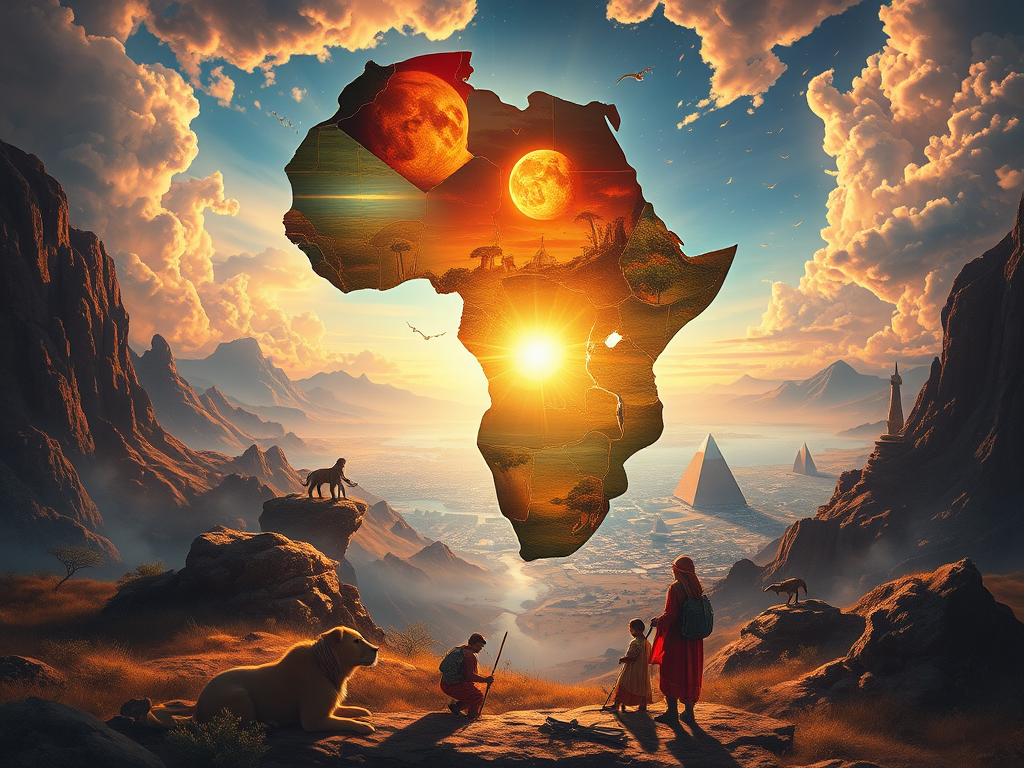
The idea of a borderless Africa or a “United States of Africa” has been floating around for over 60 years. When the great visionary Kwame Nkrumah militated so vociferously for it, his peers criticized him. They thought he was over ambitious. They believed he had an insatiable appetite to exert control on the entire continent. The ongoing debate is evidence of his extraordinary vision. His insight was far above the understanding of many of his generation. It remains beyond even subsequent ones.
After fifty years of decolonization, Africa largely remains economically and politically fragmented. Political independence has yet to usher the continent into an era of true economic independence. African countries mistakenly continue to cherish artificial or contrived boundaries.
The existing boundaries of the 54 nation states in Africa today are primarily a direct product of the Berlin Conference of 1884. This conference partitioned Africa among the European powers. It is a great folly for the continent to continue to cherish and embrace such contrived boundaries drawn to serve the political and economic interests of others.The time has never been this ripe since Africa’s post-independence leaders envisioned continental integration.
The continent grapples with mass human migration. This migration is necessitated by regional conflict and insecurity. Africa without borders offers a tangible solution to these complex challenges. In other words, a borderless Africa would foster regional integration, economic growth, and social cohesion across the continent.
One of the biggest advantages of a borderless Africa is the creation of a single market. Presently, African economies struggle with trade barriers, tariffs, and custom restrictions. These obstacles prevent cooperation and growth. A borderless Africa would allow people, goods, and services to move freely. This would ultimately lead to an economic boom in intra-African trade.
The continent is currently dealing with a high youth unemployment. The freedom of movement aligns skills with demand across regions. For example, a medical doctor in Ethiopia can work in South Africa. Similarly, a teacher from Ghana can find meaningful work in Rwanda without the complexity and hassles with visa necessity. Paradoxically, it is easier for foreigners to navigate and travel the continent than Africans. This is largely due to Kafkaesque bureaucratic hurdles and travel restrictions.
The wish for a borderless Africa reverberates deeply within the hearts of most people across the continent. It speaks to an underlying truth: the capricious or artificial barriers drawn by colonial governments have undeniably fragmented a common heritage, dividing communities with shared histories.
There are several obstacles preventing Africa from entering the phase of self-reliant development and continental integration. These obstacles include internal divisiveness, structural poverty, and poor governance. Competing national interests also play a role. Irrational fragmentation from dividing the continent into incoherent real estates of the Africans is another issue. Additionally, dependence on foreign donors to finance development hinders progress.
People on the continent today understand better than ever before that their small economies can only improve and compete if they allow free movements of people, goods, services and knowledge. The fact is that none of the states in post-colonial Africa is economically and politically standing steady and making the sort of progress one can describe seriously as developmental, so reason behooves continental integration. Africa can become a formidable force. To achieve this, it must unite its vast resources and dismantle its artificial boundaries.
Dr. Kwame Nkrumah spoke about this issue to his fellow African leaders. He stated that just as Africans understood the need for political independence to shape their national destinies, they must also recognize the importance of economic independence. This economic independence resides in their African union and requires the same focus on political achievement. In other words, political independence is not enough to rid Africa of the consequences of colonial rule.
Africa is still a sleeping economic giant despite its many decades of being exploited by other forces. Africa is the future because it has its natural resources almost virgin unlike other parts of the world. The hoi polloi can see hope in fighting abject poverty, corruption and mismanagement by bringing their vast resources together.
While challenges remain, like infrastructure and governance, a borderless Africa offers the potential of unity, prosperity, and lasting peace.
 Global Politics Today
Leave a Reply