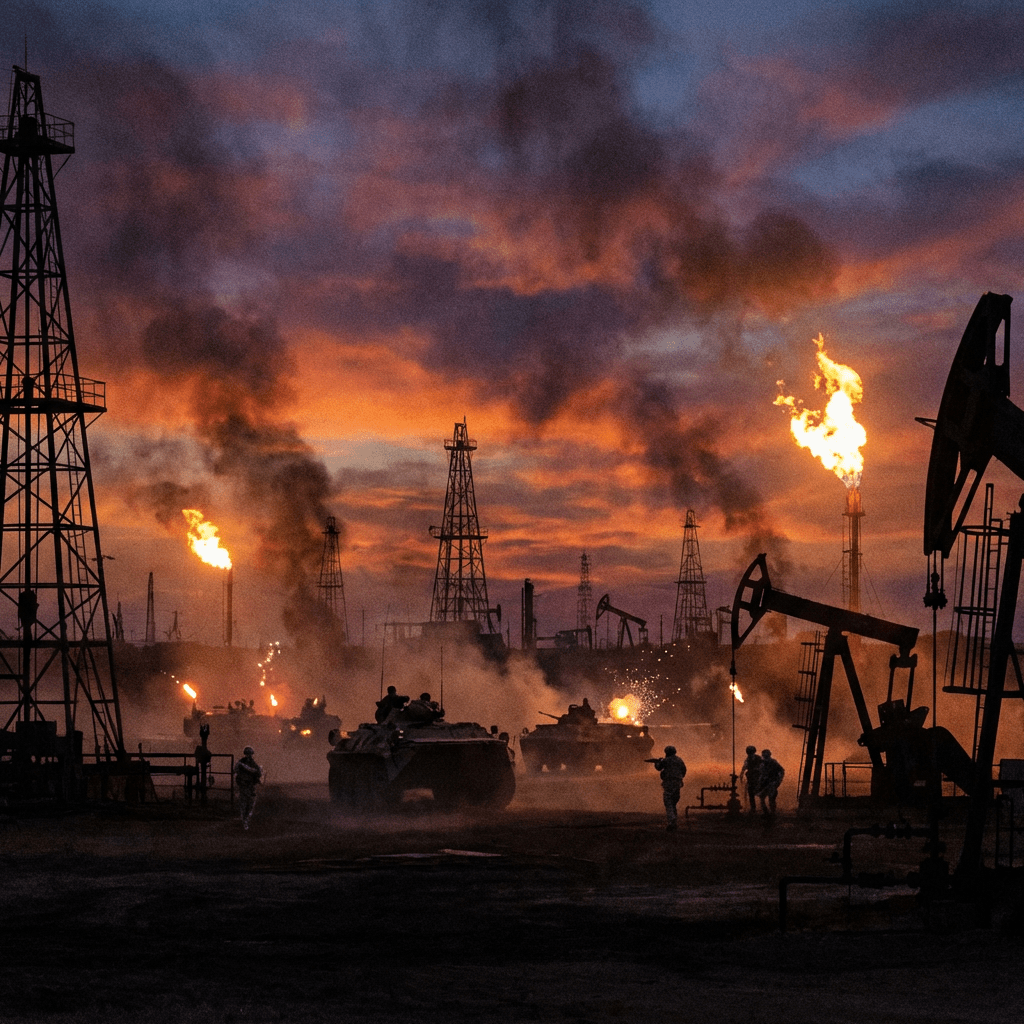
Georges Clemenceau, the French statesman and Prime Minister who led France to victory in the first world war, once said “a drop of oil is worth a drop of blood.” His maxim highlights the intense geopolitical value of oil. In other words, it signifies that nations are sometimes willing to sacrifice human lives to secure oil resources.
Oil is the engine of modern life. It provides gasoline for vehicles, diesel for trucks, heavy oil for ships, and jet fuel for planes. In other words, transportation would virtually come to a halt without “black gold.” Business travel and recreational activities would collapse, shipping would cease, and military vehicles would be incapacitated.
Oil and war have been linked since the dawn of the twentieth century, however, the nature of this relationship has changed over the past decades. Oil played a pivotal role in the two world wars, where petroleum was essential for the prosecution of those wars due to the revolution in military strategy that relied on aircraft, tanks, motor vehicles, and ships.
Iraq’s invasion of Kuwait in 1990 is often referred to as a classic oil war. Iraq launched a major conflict geared at grabbing its neighbor’s petroleum resources. Some have argued that Saddam Hussein invaded Kuwait because he believed that aggression would be profitable. In other words, by seizing his neighbor’s resources, Iraq would gain enormous wealth and subsequently become the world’s largest oil producer. Others have also put forward other geopolitical reasons. Be that as it may, it cannot be gainsaid that petroleum played a crucial and strategic role in that invasion.
Petroleum resources also played a significant role in the US invasion of Iraq in 2003. Oil was not the only goal of the Iraq war, however, it was the central one. Big oil companies have been trying for years to gain access to Iraq’s petroleum reserves, which had been nationalized by the Saddam Hussein government. Prior to the invasion in 2003, Saddam Hussein and laws in Iraq were the main hindering blocks standing in the way of the big oil companies. The invasion dealt decisively with the former, however, the latter would require more political and diplomatic maneuverings. New laws and regulations, such as the Iraq Hydrocarbon Law, which was somewhat drafted and spearheaded by the coalition and oil companies were introduced in the Iraqi legislature or government. In a nutshell, the war in Iraq was largely driven by Big Oil.
The current upheaval in the Middle East has driven up the price of petroleum globally, which once again underscores the strong link between oil and war. In other words, conflicts in oil-producing regions often drive up global oil prices as a result of supply fears and increasing transportation or shipping cost. The ongoing conflict situation in Iran is creating geopolitical and economic uncertainty. As oil prices rise, there is the likelihood for a global economic slowdown or recession.
Oil is a leading or major cause of wars or conflicts. It fuels international conflicts through resource wars where state actors try to grab resources or oil reserves by force. Also, the possibility for oil-market dominance tends to lead to conflicts in petroleum-dominated regions.
The nexus between oil and conflicts are increasingly becoming important given the shift in global oil markets. In other words, the transition or shift in the pattern in global petroleum production away from traditional Middle Eastern providers to new oil producers in Africa and other regions in the Global South increases the magnitude of oil-war linkages in the future. In other words, as many developing countries become oil-producing countries, the potential of conflicts raises new global security concerns.
 Global Politics Today
Leave a Reply