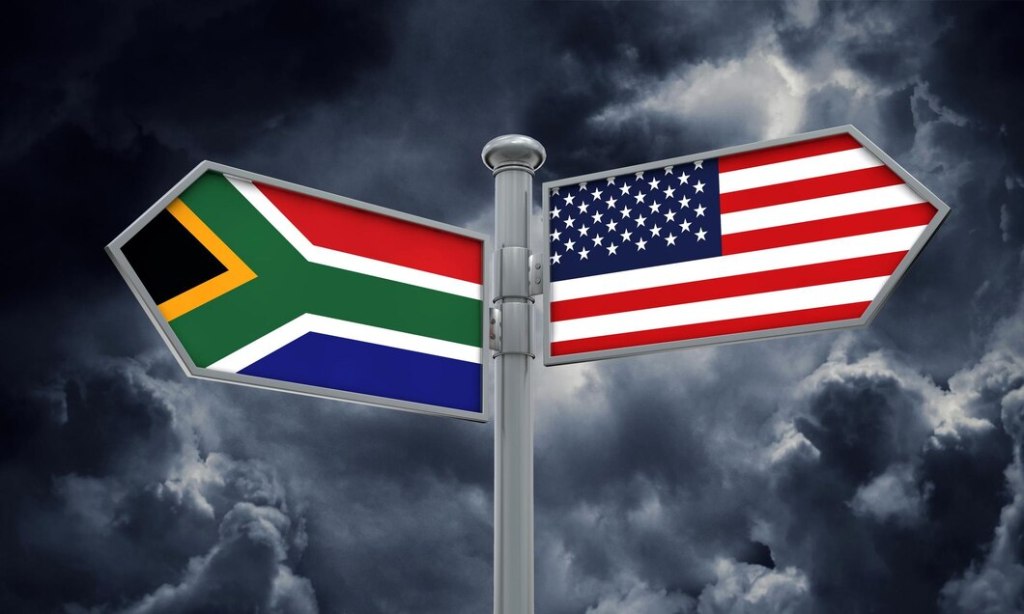
South Africa, fondly known as the “rainbow nation” due to its very diverse and multicultural society and the United States have had a complex relationship for many decades. Both countries occupy esteemed positions on the global stage. South Africa is a continental power, and the United States is a global power.
During the Apartheid era, the United States supported contradictory policies towards South Africa, influenced by conflicting domestics policies and international pressure. In other words, on one hand, public sentiment and lawmakers in the US condemned the Apartheid regime in South Africa. On the other hand, geopolitical frictions or tension, especially with the former Soviet Union during the Cold War led consecutive US governments to treat the Apartheid regime with “kid gloves.” In essence, successive US governments tolerated and implicitly supported the Apartheid regime in South Africa.
Domestic and racial politics in the US also negatively contributed to the relationship, and in some ways continues to this day between both countries. In other words, some segment of the US population supported the Apartheid regime, while others categorically condemned the Apartheid government. These inconsistencies most often displayed in US foreign policy, which moved from condemnation to benign support.
The Apartheid regime came to an end in 1994; however, old suspicions and mistrust still remain between both countries. Former South African President Nelson Mandela and the African National Congress (ANC) were listed on the terrorist list of the United States government until 2008. In other words, Nelson Mandela was still considered a “terrorist” by the US government way into his tenure as the first black president of South Africa. This was supposedly due to the ANC receiving support from the former Soviet Union to resist the Apartheid or Afrikaner regime.
The diplomatic relations between the two countries have been tempestuous in recent years. There have been periods of cooperation, however, true genuine strategic and political alignment have been consistently lacking. This is quite interesting given the fact that the United States is one of South Africa’s major bilateral trading partners, second only to China. Trade relations between the two countries have been quite steady spearheaded by the African Growth and Opportunity Agreement (AGOA), which provides South African goods or exports preferential access to American markets.
The current US administration has accused President Ramaphosa’s government of racial animus towards Afrikaners. The Afrikaners constitute about 8% of the population in South Africa, yet, they own about 80% of the farm and arable land in South Africa. The United States government has accused the South African government of racial genocide, which has been widely debunked. President Ramaphosa’s political party (ANC) has led South Africa since the end of Apartheid in 1994.
At the core of this political brouhaha is the Expropriation Act of 2024, which is akin to Eminent domain in the United States where the government can take private property for public use (with just and equitable compensation), even without the owner’s consent. The South African Expropriation Act aims to achieve badly needed land reform. It seeks to right some of the historical injustices linked to the Apartheid era.
The future between South Africa and the United States is most likely to be governed by practical cooperation in areas of mutual and strategic benefit, such as trade, health, security, and peacekeeping missions, along with frequent disagreements on issues ranging from geopolitics to human rights.


Leave a Reply