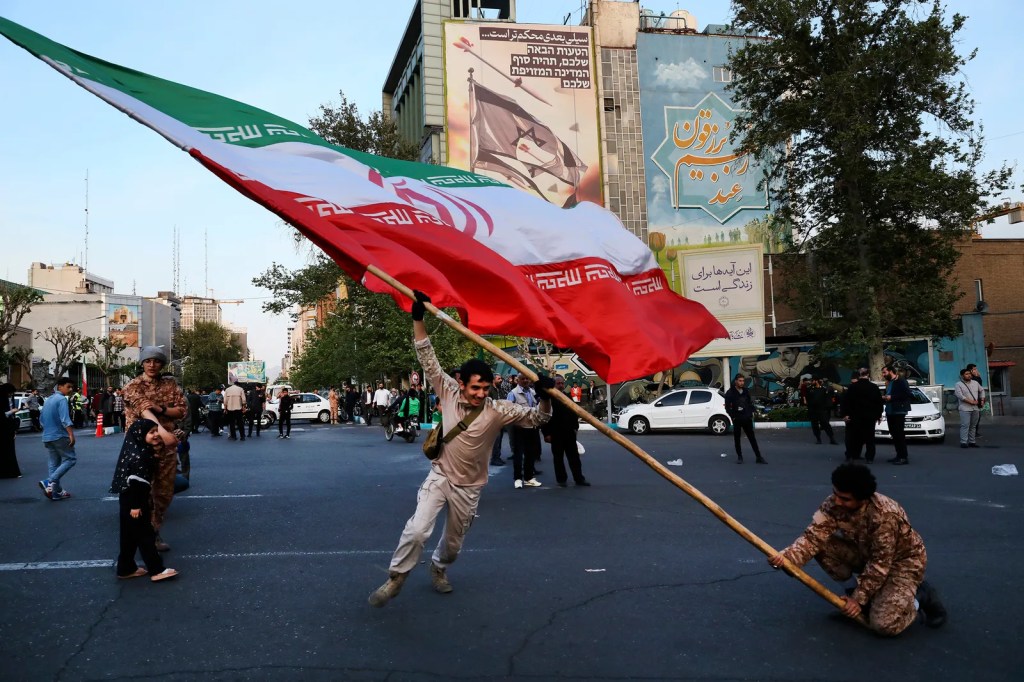
To understand the future investigate the past. In other words, to appreciate the current political climate in the Islamic Republic of Iran, one needs to look back into the past and do some revisionist history.
Iran was once upon a time a secular government that was modernizing and thriving in the areas of education, social welfare programs, and making strides towards a more democratic government. In other words, it was confidently moving towards the West. That trajectory was upended in 1953 when the government of Mohammad Mosaddegh was overthrown in a coup d’état by the US and UK governments.
The US and UK governments played a pivotal role in shaping modern Iranian politics by orchestrating the 1953 overthrow of Iran’s democratically elected Prime Minister Mohammad Mosaddegh. The US and UK installed Prince Reza Pahlavi to absolute power who suppressed democratic norms and consequently influencing the anti-Western backlash of the 1979 Islamic Revolution.
Prior to the overthrow, Mohammad Mosaddegh was nationalizing the country’s vast and lucrative oil fields, which was costing Western oil businesses dearly in terms of investments and other economic interests. The oil fields were under the control of the Anglo-Iranian Oil Company (AIOC). Fearing a Communist takeover, Prime Minister Winston Churchill of the UK and Eisenhower-led US administration decided to overthrow Mosaddegh’s government.
Another point worth noting is the political and socio-economic climate in Iran during that period. There were palpable economic tensions necessitated by the UK embargo on Iranian goods and political turmoil was taking a toll on Mosaddegh’s popularity and political power. The embargo was a calculated attempt by the UK to stiffen and suffocate the Iranian economy and thereby weakening and destabilizing Mosaddegh’s government.
The overthrow of Mohammad Mosaddegh ushered in more than two decades of radical dictatorship under the West-backed leader Mohammad Reza Pahlavi. It also guaranteed Western access and control of Iran’s petroleum resources, thereby preventing the former Soviet Union from competing for Iranian oil.
Democratic tenets and political freedom were immensely suppressed under the leadership of Mohammad Reza Pahlavi. Political dissent and opposition were swiftly squashed. There was essentially a culture of fear and silence that permeated every facet of Iranian society. Many of the anti-Western or anti-American sentiment in Iran is mostly a defensive response to past actions of the West in the country.
The West-led overthrow of the democratically elected government and the events that ensued has been known as the “blowback effect”. The blowback effect is essentially the unintended, negative, and unforeseen consequences of a covert foreign operation that comes back to haunt or hurt the country or group that effected or initiated it.
So, is it possible that Iran would have been a democratically thriving nation in the Middle East if the West had not interfered with its internal political structure? The jury is still out an that issue. However, it cannot be gainsaid that the political system and structure would be quite different to its current state.


Leave a Reply