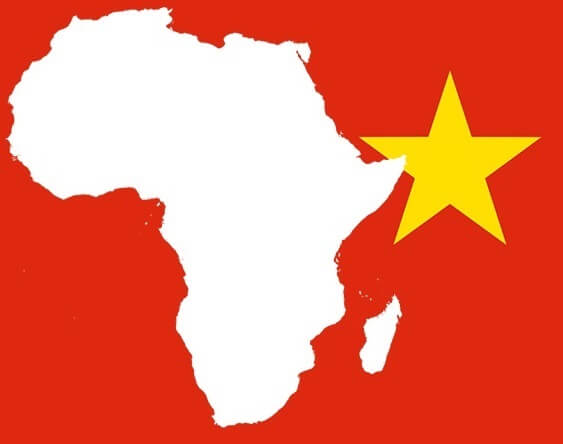
More than a century after European powers partitioned Africa, there appears to be a new scramble for the continent, this time for a share of the continent’s enticing economic opportunities and abundant resources. Once disenfranchised or marginalized on the global stage, the past twenty years has witnessed Africa emerge as a global supplier of vital resources like lithium, oil, uranium, cobalt, and gold. With its share of global trade and investment now rising, the continent finds itself at the center of a battle for access and control of its natural resources.
China’s mercurial rise and role on the continent has emerged particularly large in the past decade, however, there now appears to be a new scramble ongoing involving a broad range of established and emerging economic powers from the European Union, and US to Brazil, Japan and Russia. Investment interest on the continent is at an all time high, global business leaders are discussing how the continent can benefit from new financial ventures.
Some have argued that Africa enjoys increased trade and investments from China; critics, however, claim that this newly found interest or engagement could be reminiscent of the colonial era, depending on unequal exchange and exploitation of the continent’s resources.
China’s engagement with Africa is mostly economic. Over the last two decades, China has become Africa’s largest bilateral trading partner. Approximately 20% of the continent’s exports now go to China. About 16% of Africa’s imports come from China, according to the International Monetary Fund (IMF). This amounted to a record $282 billion in total trade volume in 2023. Primary commodities — metals, mineral products, and fuel — account for about three fifths of Africa’s exports to China
Africa’s strategic importance begins with its unquestionable resource endowments, particularly in critical minerals vital for technological and defense advancement. Africa dominates global resources that drive or power everything from military aircraft to smartphones, making partnerships with African governments a national security imperative rather than a development agenda.
Africa’s superiority in critical minerals is staggering and strategically decisive for global supply chains. For instance, the Democratic Republic of Congo (DRC) controls about 70% of the world’s cobalt and lithium reserves, which is essential for battery production, South Africa dominates in the area of platinum for industrial applications. In a nutshell, these crucial minerals represent the foundation of modern technology.
The agricultural aspect adds another layer of strategic importance. Africa has about 60% of the world’s arable land. In other words, the continent represents the world’s last major frontier for agricultural expansion. The Chinese government has recognized this reality and has invested massively in Africa’s agricultural infrastructure, thereby securing long-term food supply agreements.
China’s approach to Africa represents the most holistic and extensive foreign engagement policy on the continent since the colonial era. In other words, unlike previous European powers, Beijing’s strategy or modus operandi involves massive infrastructure investment amalgamated with long-term partnership agreements. In essence, China perceives the African continent as a crucial element in reshaping global power dynamics.
As this new scramble for Africa escalates, the nations on the continent find themselves at the center of a global strategic competition with enormous implications. How African governments traverse or navigate these complex relationships will greatly impact the continent’s trajectory and by extension, the larger international system.
In light of these developments and renewed scramble, Africa should put in place resilient institutional reforms and act as the decisive power on the continent. In other words, the people on the continent should be the primary beneficiaries from any foreign or bilateral engagements in their countries. Any new found engagement should be in Africa’s best economic and political interest.


Leave a Reply